
Rezan Has Museum
Underneath the floors of a tobacco factory, Istanbul hid a thousand-year-old secret. When workers began renovating the Cibali factory building in the early 2000s, they broke through into the Karanlık çeşme — the Dark Fountain — a Byzantine cistern dating to the 11th century, its 48 arches still standing in the dark, column capitals carved in styles spanning half a millennium of Byzantine craftsmanship. The discovery transformed the renovation project entirely. What had been planned as a university arts campus became something rarer: a museum built inside a museum, where you walk across Ottoman factory floors and descend into Byzantine engineering at the same time.
The Factory, the University, and the Prize
The Cibali Tobacco Factory operated for well over a century on the southern shore of the Golden Horn, in the Cibali neighborhood of Istanbul's Fatih district. When Kadir Has University — named for the Turkish philanthropist who endowed it — took over the complex, it faced a challenge familiar to adaptive reuse projects the world over: how to honor what a building has been while making it into something new. The answer here won a European Union Prize for Cultural Heritage, recognizing the conversion as an exceptional example of rescuing industrial architecture without erasing its identity. The tobacco smell is long gone, but the bones of the factory remain: its thick stone walls, its proportions, the memory of the women and men who worked the production lines. Ahu Has, daughter-in-law of Kadir Has, founded the museum in May 2007, naming it after Rezan Has, Kadir Has's wife. The museum opened with the 11th International Eastern Carpet Conference, an exhibition called 'Timeless Simplicity' — a fitting inaugural theme for a building that had just proven its own timelessness.
The Dark Fountain Below
The cistern they found beneath the factory floors is one of the few surviving Byzantine structures along the Golden Horn outside the old Walls of Constantinople. It was built at the end of the 11th century — the same era that saw the First Crusade march through Constantinople — using reclaimed materials: stone, terracotta leaf brick, and Khorasan mortar, a lime-based mix that Byzantine builders trusted for its durability in wet conditions. The column capitals were fashioned in various styles, spanning from the early Byzantine period all the way to the 11th century, suggesting they were gathered from demolished or repurposed structures across the city. The cistern held water for the neighborhood until it lost its purpose, at which point the Ottomans repurposed it as a tobacco warehouse. During World War II, it served as food storage. It had three lives before archaeology gave it a fourth. Standing among those 48 arches today, with water seeping through ancient stone and columns disappearing into shadow, the name Dark Fountain feels entirely earned.
Journeys Through Time on the Gallery Walls
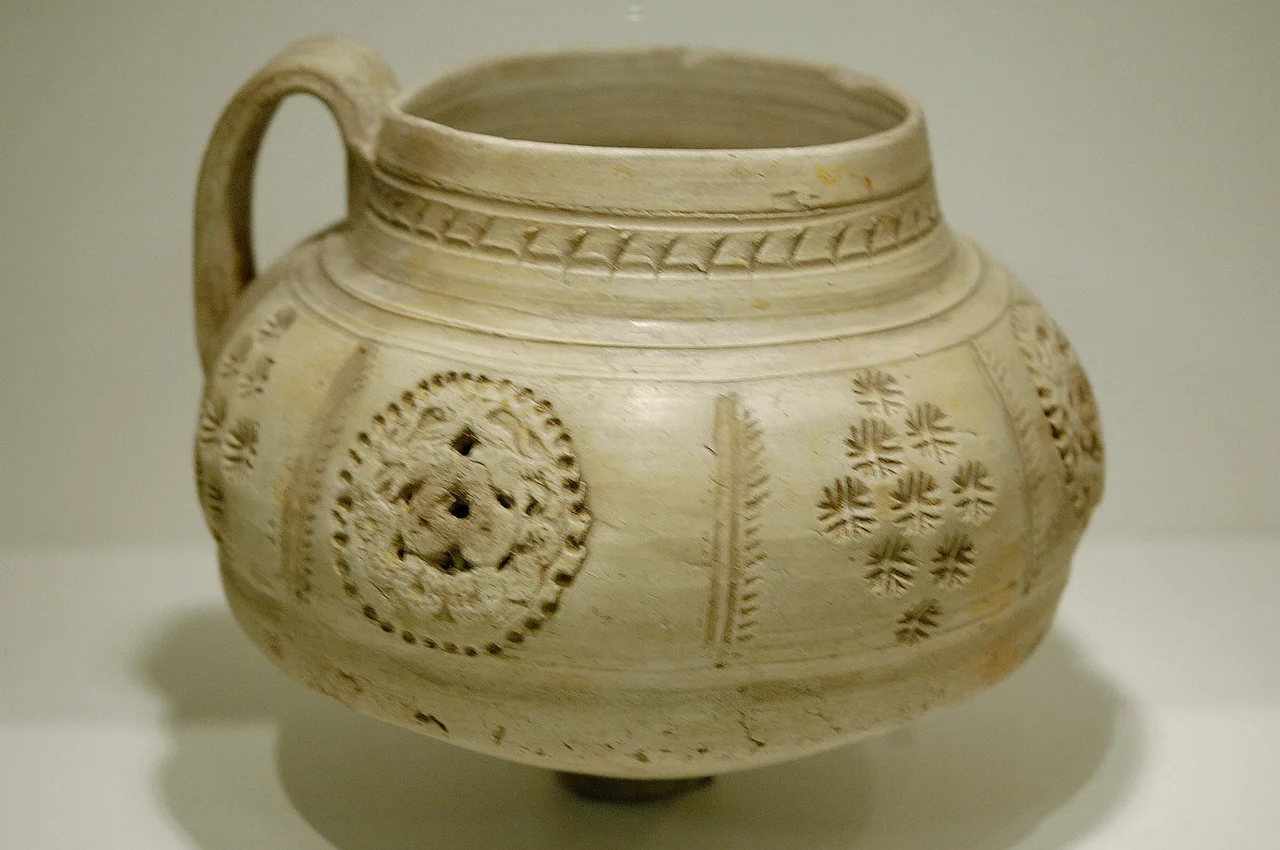
The exhibitions the Rezan Has Museum mounts are as varied as Istanbul's own history. 'Archeology of Everyday Life,' which ran from 2020 through 2022, traced 8,000 years of human habitation — from 6,500 BC to 1,300 AD — along the corridor between the Golden Horn coast and Anatolia. Another exhibition, 'Whispers of the Lost Languages,' displayed cuneiform script examples, the earliest writing systems ever devised. 'Silent Witnesses From Neolithic Period to the Seljuks' brought together archaeological finds from across the same geographic sweep. The museum also mounted 'Like Moths to the Flame,' documenting the Ottoman fire brigades — essential history in a city that has burned and rebuilt itself repeatedly over centuries. None of these exhibitions feel mismatched with their setting. In a building that is simultaneously Byzantine, Ottoman, and modern, showing the full length of human civilization feels like the only appropriate ambition.
Layers of Golden Horn
The Golden Horn itself is part of the story. This narrow saltwater inlet bisecting the European side of Istanbul was the harbor that made Constantinople wealthy and defensible for more than a thousand years. Byzantine emperors stretched a great chain across its mouth to keep enemy fleets out. The Ottomans dragged their ships overland to bypass it during the 1453 siege. The neighborhoods on its southern shore — Cibali, Fener, Balat — retain traces of that long history in crumbling Byzantine walls, Greek Orthodox churches, and Ottoman fountains tucked into side streets. The Rezan Has Museum sits in this geography deliberately. It is not a museum that has been transplanted to a neutral location; it is embedded in the stratigraphy of the place itself, each layer of the building corresponding to a different era of the city around it. To visit is to do archaeology with your feet.
From the Air
The Rezan Has Museum sits at 41.024°N, 28.960°E on the southern shore of the Golden Horn, in Istanbul's Fatih district on the European side of the city. Approaching from Istanbul Airport (LTFM) to the northwest, the Golden Horn is visible as the distinctive narrow inlet separating the European shore into two peninsulas. The museum occupies the Cibali quarter, identifiable from the air by the dense Ottoman-era urban fabric along the waterfront. Recommended viewing altitude: 2,000–4,000 feet for a clear view of the Golden Horn's full length and the historic peninsula. The Galata Tower and the dome of Hagia Sophia provide orientation landmarks to the south and east respectively.
Nearby Stories
- Kocaeli Peninsula 7.6 km away
- Second Battle of Çatalca 11 km away
- Istanbul's Rural Outskirts 14 km away
- MV Struma 20 km away
- HMAS AE2 36 km away
- Bursa 66 km away
- Sangarius Bridge 71 km away
- Januarius MacGahan 101 km away