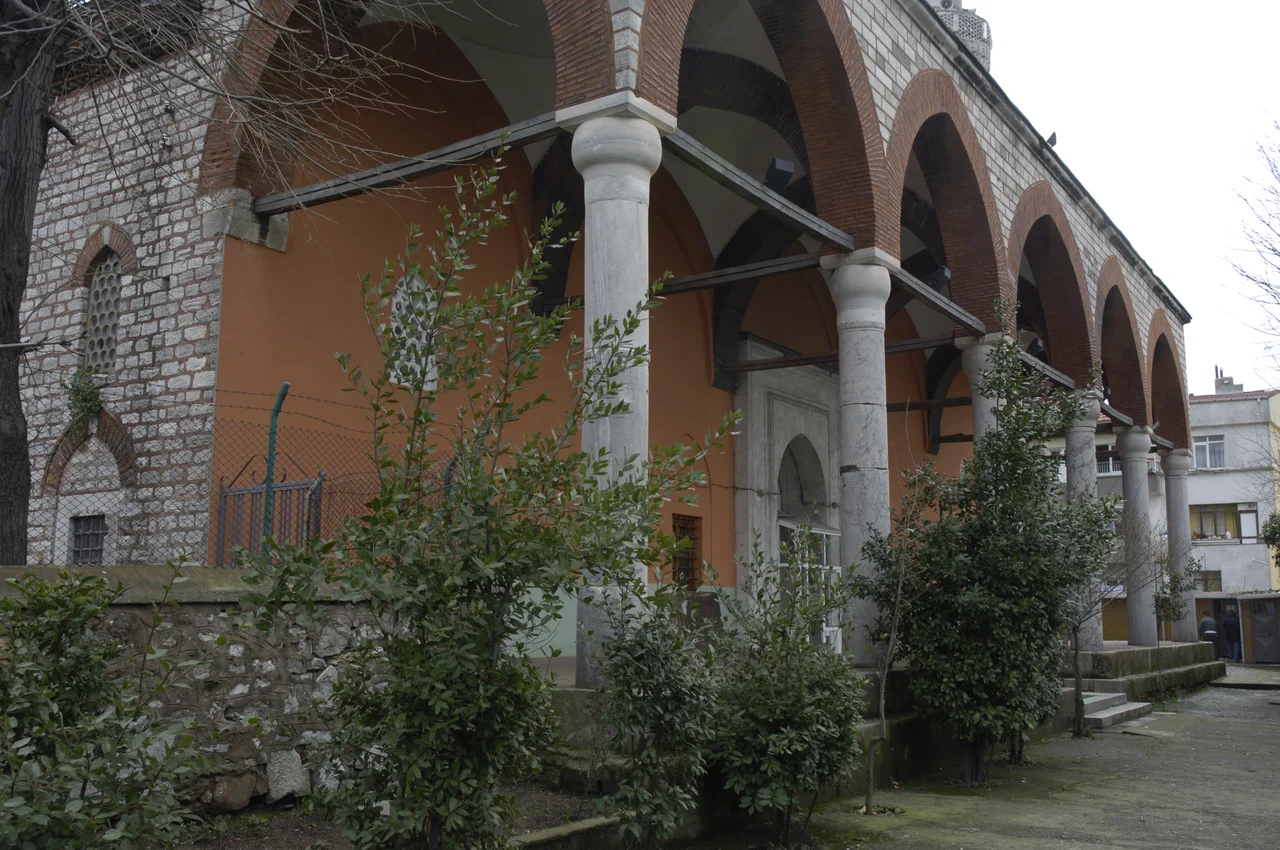

Rum Mehmed Pasha Mosque
The Grand Vizier who commissioned this mosque was Greek. His name, Rum Mehmed Pasha, encoded that fact: 'Rum' was the Ottoman term for the Greek-speaking Christians of the former Byzantine world, and Mehmed Pasha wore it as part of his identity even after converting to Islam and rising to the highest office in the Ottoman government. In 1471 — just eighteen years after the fall of Constantinople — a mosque was built in Üsküdar in his name, on the Asian shore of the Bosphorus. Rum Mehmed Pasha had been dismissed from the grand vizierate in 1469 and executed in 1470; the mosque, completed the following year, stands as a monument to a man who did not live to see it finished. It was the first mosque to go up on that side of the strait after the conquest. The building he commissioned did not try to erase where he had come from: it blends Ottoman and Byzantine architectural elements in stone and brick, a structure that carries its own complex heritage in every wall.
Üsküdar: The Asian Shore
Üsküdar sits directly across the Bosphorus from the historic peninsula of old Constantinople, close enough that on a clear day you can see Hagia Sophia's dome from its waterfront. It is an ancient settlement — the Greeks called it Chrysopolis, City of Gold — and it served for centuries as the departure point for caravans heading east into Anatolia and beyond. When the Ottomans consolidated their hold on Istanbul after 1453, Üsküdar became a place of religious and civic investment. The Rum Mehmed Pasha Mosque stands near the Bosphorus waterfront, in the company of other significant Ottoman mosques: the Şemsi Pasha Mosque, the Yeni Valide Mosque, and the Mihrimah Sultan Mosque are all clustered in the same district. But the Rum Mehmed Pasha Mosque predates all of them as the first purpose-built mosque on this side of the water.
A Greek Vizier's Legacy in Stone
Rum Mehmed Pasha served as Grand Vizier — the highest administrative officer of the Ottoman Empire — and his life represented one of the central mechanisms by which the early Ottoman state absorbed and transformed the populations it conquered. Born Greek, raised likely within Byzantine Christian culture, he converted, rose through Ottoman service, and wielded immense power. The mosque he built reflects that layered identity. Where the great Ottoman imperial mosques of the period — Fatih Camii, built in the same decade in Constantinople itself — deployed the full vocabulary of Ottoman religious architecture, the Rum Mehmed Pasha Mosque is more intimate, its stone and brick construction drawing on Byzantine building traditions that the local craftsmen knew from a lifetime of experience. The arches and walls show Byzantine influence not as imitation or nostalgia, but as craft: this was simply how the builders in this part of the world knew how to build.
Eighteen Years After the Conquest
The context in which this mosque was built matters. The Ottoman conquest of Constantinople in 1453 had ended the Eastern Roman Empire — a political and cultural entity that had existed in some form for over a thousand years. By 1471, the empire's former capital had been renamed Istanbul and was being remade as the new center of Ottoman power. Hagia Sophia, the great church that the Byzantines had built in the 6th century, had been converted to a mosque within days of the conquest. The city was being repopulated, new institutions founded, old ones transformed. In Üsküdar, Rum Mehmed Pasha's commission represented that transformation reaching across the strait to the Asian shore — planting Islamic worship in a city that had, until very recently, been among the most important centers of Eastern Christian civilization. The mosque survived a 1953 restoration; the bones of the original 1471 structure remain in its walls.
Standing in the District Today
Üsküdar today is a dense, lively urban district — one of Istanbul's most historically layered neighborhoods, where Ottoman waterfront mansions and modern apartment buildings occupy the same streets, and the Bosphorus ferry docks anchor a constant flow of commuters crossing between continents. The Rum Mehmed Pasha Mosque sits in this fabric quietly, less prominent than the nearby Mihrimah Sultan complex but no less significant to those who know what they are looking at. Its minaret rises above the surrounding buildings; its stone-and-brick facade carries the visual grammar of the 15th century unchanged through centuries of Istanbul's turbulent history. For a building that marked the moment Islamic architecture arrived on the Asian shore, it wears its history with a certain plainness — the architecture of a transition that happened once, definitively, and did not need to announce itself.
From the Air
The Rum Mehmed Pasha Mosque is located at 41.025°N, 29.011°E in the Üsküdar district on the Asian (Anatolian) side of Istanbul. The nearest major airport is Sabiha Gökçen International Airport (LTFJ), approximately 35 km to the southeast. Approaching from LTFJ, the Üsküdar waterfront is visible along the Asian shore of the Bosphorus, directly across from the historic Sultanahmet peninsula and the dome of Hagia Sophia. The Bosphorus itself — the narrow strait separating Europe and Asia — is a dominant visual landmark from any altitude. Recommended viewing altitude: 2,000–3,500 feet for a clear view of Üsküdar and the strait. The Bosphorus Bridge (15 July Martyrs Bridge) is visible to the north, providing geographical orientation.
Nearby Stories
- Kocaeli Peninsula 7.6 km away
- Second Battle of Çatalca 11 km away
- Istanbul's Rural Outskirts 14 km away
- MV Struma 20 km away
- HMAS AE2 36 km away
- Bursa 66 km away
- Sangarius Bridge 71 km away
- Januarius MacGahan 101 km away