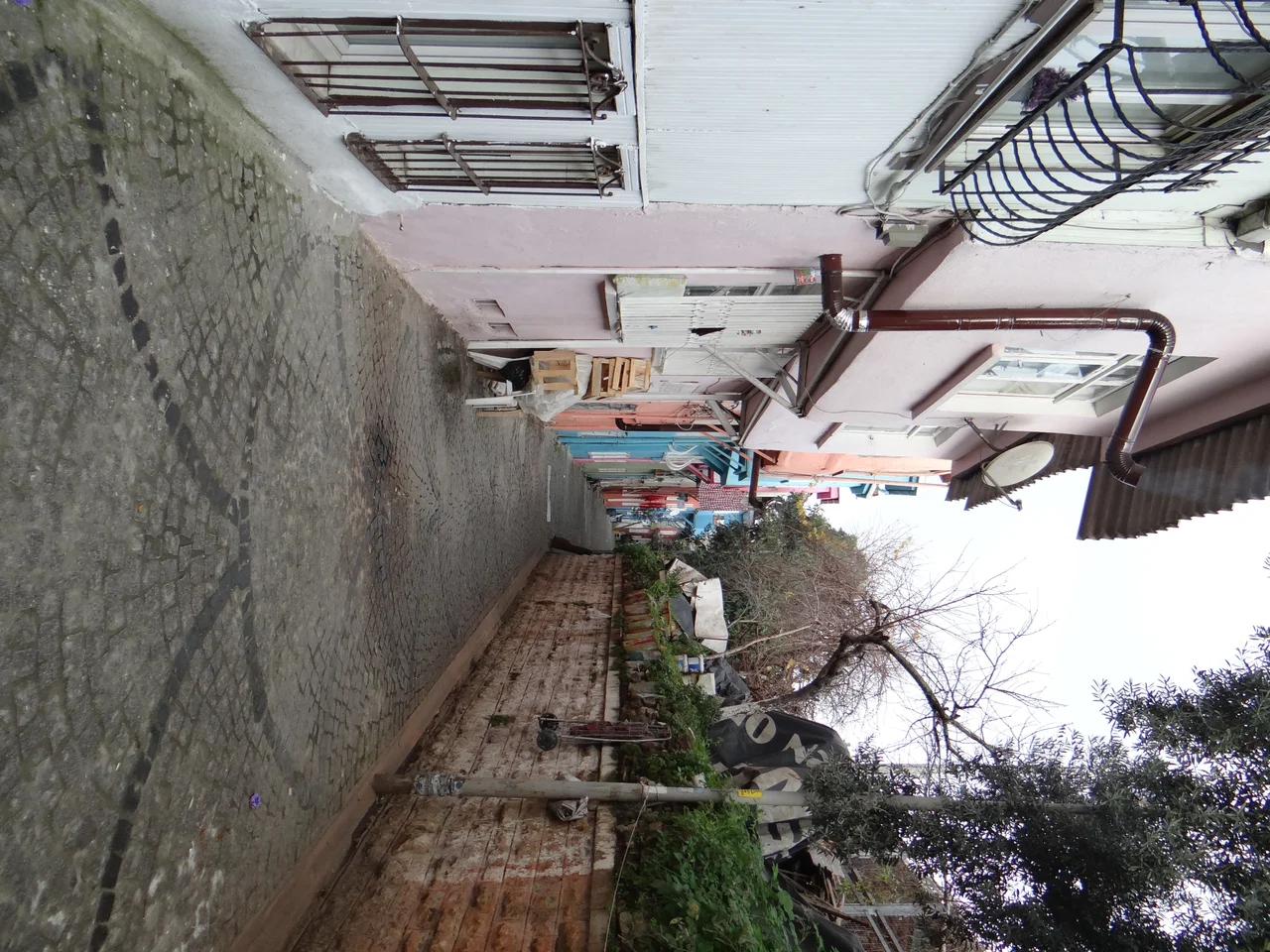

Samatya
The name comes from the Greek word for sandy — psamathion — because of the great quantity of sand once found along this stretch of the Marmara shore. Sand shifts and changes shape; so has Samatya. Long before the Ottomans arrived, before the sea walls of Constantinople ran along its waterfront, this quarter at the southwestern corner of the historic peninsula was already old. A monastic institution was established here as early as around 383 AD, at a time when the place still lay outside the walled city. For most of the centuries that followed, Samatya has been a neighborhood defined by those who chose it as home — and those who were placed here by the decisions of others.
Settled by Command
When Sultan Mehmet II took Constantinople in 1453, the city was partly depopulated — years of siege and decline had emptied many of its quarters. The new Ottoman administration repopulated the city deliberately, directing different communities to different neighborhoods. In 1458, Armenians were settled in Samatya by Mehmet II's order, bringing with them the institutions that would define the quarter for the next five centuries. The church of Surp Kevork — Saint George in Armenian — became the community's anchor. The building had previously served as an Eastern Orthodox church, with roots stretching back before the Ottoman conquest, and the Armenians inherited both its stones and its centuries. The church is also known by the name Sulu Manastırı, the Water's Monastery, a name that ties it to the sea and to the springs that once made this sandy shore distinctive.
A Neighborhood of Communities
Samatya was not exclusively Armenian. The Greek Orthodox community also had a presence here, and the quarter's layered identity — Byzantine, Armenian, Greek, Ottoman — is reflected in its churches and institutions. That layering was built over centuries of coexistence that was sometimes peaceful and sometimes tense, shaped by larger political events that the residents of Samatya did not control. The quarter was destroyed in 1782 by one of the largest fires in Istanbul's recorded history, a catastrophe that periodically reshaped many of the city's older neighborhoods. Communities rebuilt. Churches were repaired or replaced. The sandy shore kept its character even as the population's composition shifted with each generation and each political turn.
Lives Made Here
Samatya produced people whose work extended far beyond the quarter's boundaries. Hrachia Acharian, the Armenian linguist whose etymological dictionary of the Armenian language remains a foundational scholarly work, was born here. So was Avedis Zildjian III, whose family name became synonymous with cymbals — the Zildjian company, founded in Constantinople in 1623, eventually became the oldest continuously operating family-owned business in the United States after relocating there in the 1920s. Gomidas Keumurdjian, a priest of the Armenian Catholic Church who was martyred for his faith, also came from Samatya. These are not incidental details. They are the record of what a community makes when it is given space to exist — artists, scholars, craftspeople, martyrs.
Samatya Today
The quarter still sits along the Marmara shore in the Fatih district, west of the old city center and east of the Yedikule Fortress, the Castle of the Seven Towers that guards the land walls. A tram stop on the T6 line, named Kocamustafapaşa after the wider neighborhood, connects Samatya to Sirkeci and the rest of the city. The Istanbul Educational and Research Hospital serves the area. The Armenian and Greek Orthodox communities that shaped Samatya's centuries are smaller now than they once were — Istanbul's non-Muslim minorities declined sharply during the twentieth century due to emigration, discriminatory policies, and political pressures. What remains is a neighborhood that holds its past carefully, in church stones and street names and the occasional older building whose proportions speak of a different era.
From the Air
Samatya occupies the Marmara shoreline at approximately 41.00°N, 28.93°E on the European historic peninsula of Istanbul. From the air at 3,000–5,000 feet, the quarter is identifiable by the Sea of Marmara to its south and the Theodosian Walls running north-south to its west toward Yedikule. The Surp Kevork church is within the dense residential grid. Nearest airport: LTFM (Istanbul Airport), roughly 25 km to the northwest on the European side. The historic peninsula's major landmarks — the Blue Mosque, Hagia Sophia, and the Topkapı Palace — are visible to the northeast.
Nearby Stories
- Kocaeli Peninsula 7.6 km away
- Second Battle of Çatalca 11 km away
- Istanbul's Rural Outskirts 14 km away
- MV Struma 20 km away
- HMAS AE2 36 km away
- Bursa 66 km away
- Sangarius Bridge 71 km away
- Januarius MacGahan 101 km away