
Selimiye Barracks
In the winter of 1854, the corridors of the Selimiye Barracks held thousands of sick and dying men. British soldiers, many of them young, had been shipped to Istanbul from Britain on their way to the Crimean War — to fight the Russian Empire alongside Ottoman and French allies on the peninsula north of the Black Sea. Those who made it as far as Scutari, as the Europeans called Üsküdar on Istanbul's Asian shore, often arrived already ill. Cholera was spreading through the barracks. Wound infections went untreated. The wards were overcrowded and under-supplied. Around 6,000 men died in this building during the war. They were buried in a plot nearby that later became the Haydarpaşa Cemetery. On 4 November 1854, Florence Nightingale arrived with 38 volunteer nurses. She had come to try to save some of the rest.
Built for Reform
The barracks' story begins before any war. Sultan Selim III commissioned the original structure in 1800, intending it for soldiers of his newly established Nizam-ı Cedid — the 'New Order' army he was building on Western lines as part of a broader modernization of the Ottoman military. The architect was Krikor Balyan. The original building was wooden. In 1806 it was burned down by rebel Janissaries, the old guard infantry corps whose power and privileges Selim's reforms threatened. The Janissaries won that round; Selim III was deposed and then killed in 1808.
Sultan Mahmud II — who finally abolished the Janissaries in 1826 — commissioned a stone replacement in 1825. It was completed on 6 February 1828. Under Sultan Abdülmecid I, the barracks were renovated twice, in 1842–43 and again in 1849–50. During this second renovation, a seven-story tower was added to each of the four corners, giving the building the form it holds today: a vast rectangular structure enclosing a large central parade ground, with three wings of three floors and an eastern wing of two floors following the slope of the terrain.
The Men Who Died Here
When the British Army allocated the barracks as a military hospital during the Crimean War, the building's intended purpose gave way to something far grimmer. Soldiers of the 33rd and 41st foot regiments had marched through and left for the front; the wards that replaced them filled with men broken by combat and, far more often, by disease.
Cholera was the principal killer. It moved through the overcrowded wards with terrible speed, taking men who had survived battles, men who had not yet seen fighting, men who had come from opposite ends of Britain. Around 6,000 soldiers died within these walls between 1854 and the war's end in 1856. They were not casualties of battle, for the most part — they were casualties of contaminated water, inadequate sanitation, and a medical system that had not caught up with the scale of what it was being asked to manage. The dead were buried in the Haydarpaşa Cemetery, a short distance from the barracks, where their graves remain.
Florence Nightingale's Work
Nightingale arrived on 4 November 1854, thirty-four years old, with 38 nurses she had recruited and organized herself. What she found at Scutari was close to a breakdown: inadequate supplies, poor record-keeping, contaminated drinking water, and an institutional resistance to the kind of systematic reform she intended to impose. She had the force of will, and eventually the backing of the British public and press, to push through changes despite that resistance.
Her work at Scutari contributed to the development of modern nursing practice: systematic observation of patients, attention to sanitation and ventilation, rigorous record-keeping. The mortality rate among the wounded in her care fell significantly during the period she was present, though historians continue to debate exactly how much of that reduction she caused directly. She remained at Scutari until 1857, when she returned to Britain, where she was received as a national heroine. The northernmost tower of the barracks now contains a small museum dedicated partly to her memory.
The Building Today
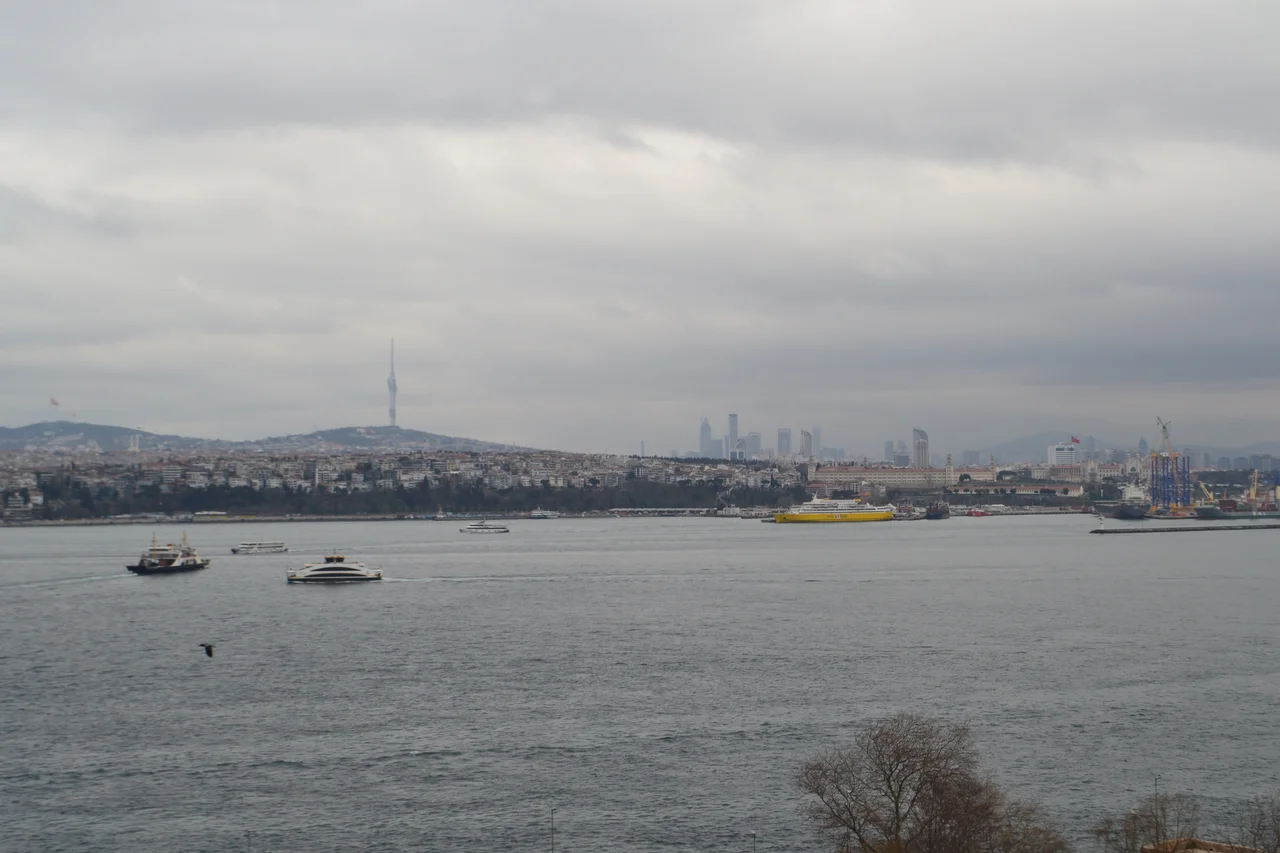
The Selimiye Barracks remain active. They serve as the headquarters of the Turkish First Army of the Turkish Land Forces — a military installation that has never stopped being a military installation in more than two centuries. The building sits in the Harem neighborhood between Üsküdar and Kadıköy, close to the Sea of Marmara, its four corner towers and the long facade facing the water visible from the Bosphorus.
The museum in the northeast tower is not large. It does not pretend to encompass everything that happened here. But it keeps a record of what the barracks witnessed in 1854–57: the scale of the suffering, the work that was attempted, and the imperfect, incremental progress that nursing and medicine made in those wards. Those 6,000 men deserve the remembering.
From the Air
The Selimiye Barracks sit at 41.008°N, 29.016°E on the Asian shore of Istanbul, in the Üsküdar district, visible from the Bosphorus as a large rectangular building with prominent corner towers. Approaching from the south or west at 2,500 feet, the barracks' mass is identifiable above the coastline, with the Sea of Marmara behind it and the European historic peninsula across the water. The nearest airport is Sabiha Gökçen International Airport (LTFJ), approximately 20 km to the southeast on the Asian side. The Bosphorus Bridge is visible to the north.
Nearby Stories
- Kocaeli Peninsula 7.6 km away
- Second Battle of Çatalca 11 km away
- Istanbul's Rural Outskirts 14 km away
- MV Struma 20 km away
- HMAS AE2 36 km away
- Bursa 66 km away
- Sangarius Bridge 71 km away
- Januarius MacGahan 101 km away