
Senussi Campaign
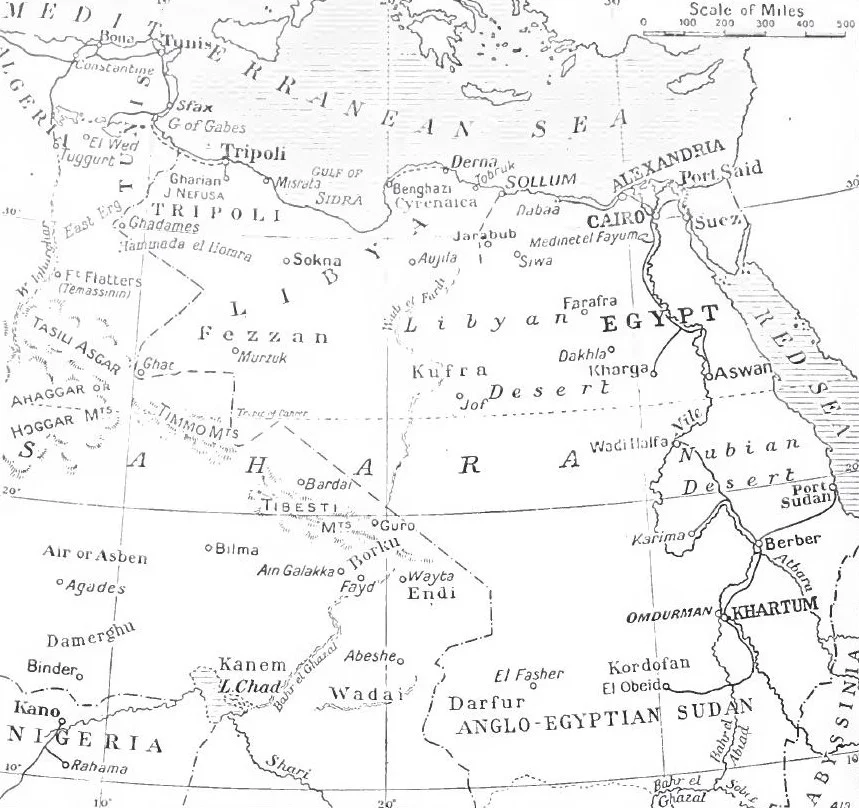
Most of the First World War was fought in trenches that barely moved for years. This part of it ranged over hundreds of kilometers of open Sahara, and it was fought by people the rest of the war scarcely noticed. From late 1915 into 1917, along the vague frontier between Italian Libya and British-held Egypt, a religious order of desert Arabs called the Senussi waged a campaign against two European empires at once. They had been pushed into it. And the way it ended would shape Libya for the next half-century.
A Peaceful Order Drawn Into War
The Senussi were not, by origin, a warlike people. Founded in the nineteenth century, the order was a network of Sufi lodges spread across the Sahara, described before 1906 as a relatively peaceful religious community opposed to fanaticism, more concerned with teaching and trade than conquest. What changed them was invasion. When Italy seized the Libyan coast in the Italo-Turkish War of 1911, the Senussi resisted from the interior, even as they kept generally friendly relations with the British next door in Egypt. Then the larger war arrived. The Ottoman Empire, which had ruled Libya, sent envoys, among them Nuri Bey, half-brother of the Ottoman war minister, and a Baghdadi officer named Jaafar Pasha, to persuade the order's leader to turn against Britain as well. In the summer of 1915 the Grand Senussi, Ahmed Sharif, was prevailed upon to declare a jihad and strike east into Egypt, in the hope of pulling British troops away from the Suez Canal.
The Frontier
It was hard country to fight over. The western edge of Egypt had never even been formally drawn, the negotiations interrupted by war and never resumed. A thin coastal strip along the Mediterranean could just support grazing and the occasional well, though the wells were far apart and could run dry without warning; in summer the ground was choking dust, in the December-to-March rains it turned to glue. South of that lay bare limestone plateau, and south of that the true desert, dunes running for hundreds of kilometers. Scattered through it were oases, some large enough to hold real populations, linked by camel tracks that the Bedouin had used for centuries. Siwa, on the edge of the sand sea, was a Senussi stronghold. Whoever wanted to control this frontier had to control water, distance, and the people who knew how to move between them.
Cars Against Camels
When the Senussi crossed into Egypt in November 1915, the British garrison had been stripped thin by Gallipoli and Mesopotamia, and the first months were uncertain. The defenders fell back, regrouped at Mersa Matruh, and fought a series of hard, confused actions in the coastal scrub, the Wadi Senab, the Wadi Majid, Halazin, where determined Senussi attacks were repulsed but the bulk of their forces slipped away across ground the British cavalry could not follow. The turning point came at Agagia in February 1916, where a column caught the Senussi in the open. The British captured Jaafar Pasha himself, and a charge by the Dorset Yeomanry, at fearful cost to its own horses and riders, broke the retreating column. More than that, it was technology that decided the campaign. The British brought armored cars and light Ford patrols that could cross the hard desert at speed, and aircraft that could see over it. Patrols that once reached tens of miles by camel now reached hundreds by engine. The Senussi, brave and mobile as they were, had no answer to it, and were steadily cut off from the Nile and isolated in the oases.
The Peace, and What Came After
By the spring of 1917 it was over. The Senussi had been forced back across the border into Libya, the oases retaken one by one, the desert left to British aircraft and armored cars. The gamble had failed on its own terms: most Egyptians never rose, and the pressure on Suez never materialized. The defeat broke the standing of Ahmed Sharif, and power within the order passed to his nephew, Sayyid Mohammed Idris, who had quietly opposed the whole campaign. On 16 April 1917 the British and the Senussi signed a peace, the modus vivendi of Acroma, which recognized Idris as the leader of Cyrenaica. It was a fateful settlement. The young man who had counseled against war, and who inherited the order because of a war he never wanted, would go on, decades later, to become King Idris I, the first and only king of independent Libya. The empty frontier where camel raiders once fought biplanes had, in its quiet way, helped decide who would rule a nation not yet born.
From the Air
The Senussi campaign played out across the Libyan-Egyptian frontier and the chain of oases west of the Nile, a band of desert roughly centered near 29°N, 26°E. The fighting stretched from the Mediterranean coast around Sollum and Mersa Matruh southward through Siwa Oasis and the inland oases of Bahariya, Farafra, Dakhla, and Kharga. From the air the theater divides cleanly: a narrow, sometimes-green coastal strip along the Mediterranean, then bare limestone plateau, then open dune running to the horizon, with isolated patches of palm-green oasis marking the wells the campaign was fought to control. Best appreciated from medium altitude (6,000 to 12,000 feet AGL), where the contrast between coast, plateau, and sand sea is clearest and the ancient caravan tracks can sometimes be picked out. Relevant airfields today include Mersa Matruh (HEMM) on the Egyptian coast and Siwa (HESW) inland, with Benghazi's Benina (HLLB) across the Libyan border to the west and Cairo (HECA) to the east. Coastal weather can bring haze and winter rain; inland, the khamsin sandstorms that hampered both armies still cut visibility to near zero with little warning.
Nearby Stories
- Cave of Swimmers 18 km away
- Gilf Kebir National Park 32 km away
- Lady Be Good (aircraft) 279 km away
- Great Man-Made River 345 km away
- Dakhla Oasis 380 km away
- White Desert National Park 455 km away
- Selima Oasis 458 km away
- Ennedi Est (province) 693 km away