
Siege of Chernihiv
On the morning of 16 March 2022, Russian artillery hit a bread queue in the city center of Chernihiv. At least eighteen people who had stood in line for a loaf were killed, and 26 wounded. By that point, the city had been under siege for three weeks, and there was very little bread left. The Russian army that had crossed into northern Ukraine on 24 February with orders to take Chernihiv quickly and roll south on Kyiv had failed to take it at all. Instead, 30,000 troops sat outside an encircled city of 300,000, dropping FAB-500 bombs on stadiums and dormitories and breadlines while the city refused to fall.
The First Hours
Before dawn on 24 February, Russian missiles hit the headquarters of Ukraine's 1st Tank Brigade at Honcharivske, just outside Chernihiv. Roughly 30,000 Russian troops crossed the border in three columns, expecting to drive south down the eastern bank of the Dnieper toward Kyiv with Chernihiv as their first prize. The plan called for a quick advance. It collided with Colonel Leonid Khoda's 1st Tank Brigade and the 58th Motorized Brigade and a city full of people who refused to leave. By the end of the first day, Ukrainian forces had repelled the initial attack and seized Russian equipment in the streets. The British Ministry of Defence reported the same evening that the Russian assault on the city had failed; Russian commanders ordered the column to bypass it instead. They never broke that pattern.
Civilians Under Fire
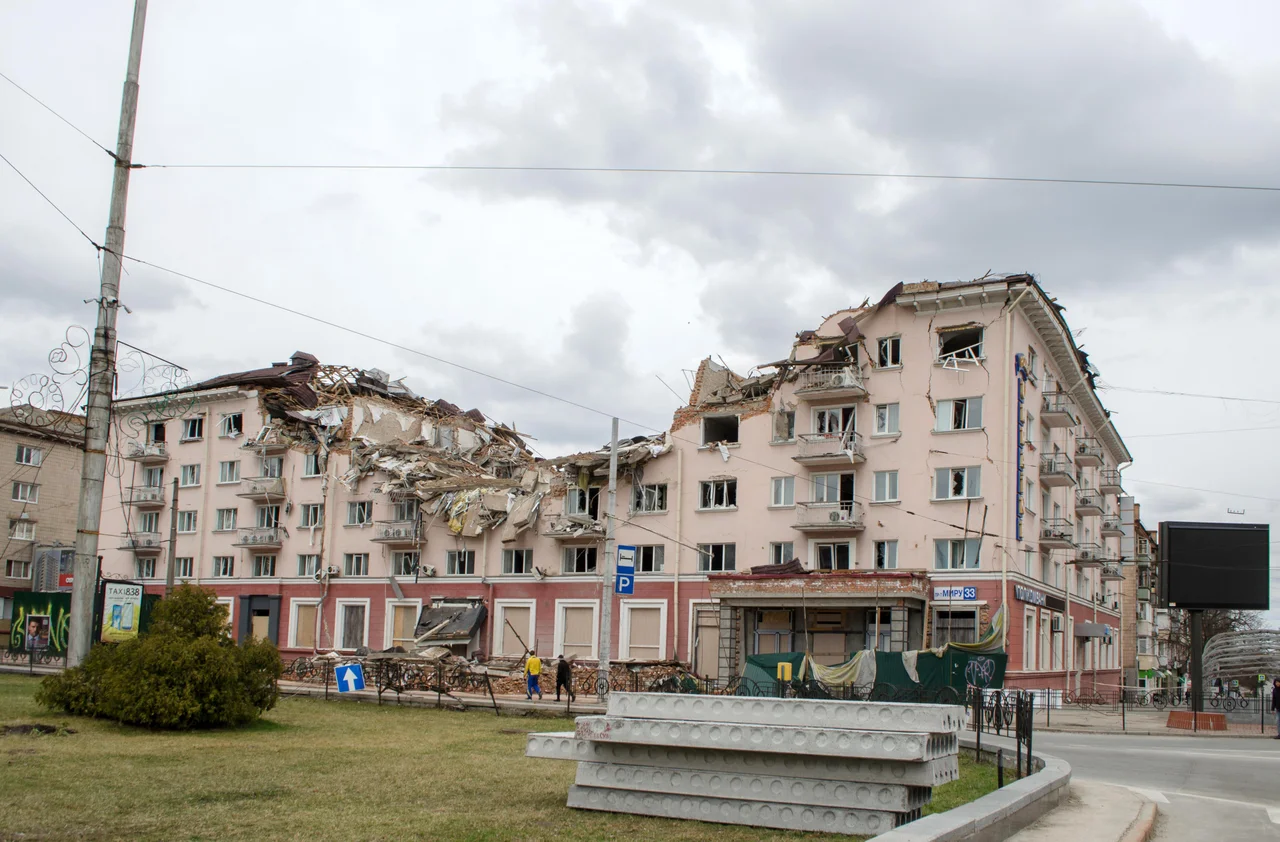
From late February onward, the bombardment was constant. On 3 March, a Russian airstrike on residential buildings and two schools killed 47 civilians and wounded 18. On 10 March, the Chernihiv Arena - a sports complex - was hit. The Hotel Ukraine was destroyed on 12 March. On 13 March, an airstrike at 5:46 in the morning hit a dormitory, killing five civilians, three of them children. Around 3,000 graves at the Yatsevo cemetery were damaged when shelling destroyed the church beside them. The Korolenko Regional Library was bombed on 30 March. Mayor Vladyslav Atroshenko told reporters that by the end of the siege he believed 350 to 400 civilians had been killed - up to 100 burials a day, dug between bombardments. More than half the city's population fled. Those who stayed lived without electricity, water, or heat in the early-spring cold.
The Defenders
Colonel Khoda would later describe a hilltop northeast of the city as the place where Chernihiv was saved. Russian and Ukrainian troops fought across it for days; the Russians dropped FAB-500 bombs that destroyed much of the hill itself before the Ukrainians held. To the south, the 58th Motorized Brigade kept open what locals began calling the road of life - a single supply route through outlying villages that connected the city to Kyivan-controlled territory. When the 58th retook the village of Sloboda on 30 March, Russian forces in nearby Lukashivka had to withdraw to avoid being cut off. Residents of Lukashivka described what occupation had been like: beatings, mock executions, the confiscation of phones and passports, livestock killed for sport. By the time Russian troops left on 1 April, more than 700 civilians had died in the siege according to the city's mayor.
Why It Mattered
The Russian plan for the war's first weeks rested on speed: take Chernihiv on day two, drive south down the Dnieper, link with the Belarus-launched column hitting Kyiv from the northwest, and force a capitulation before the world could organize a response. None of it worked, and the failure at Chernihiv was central to the larger collapse. The Russian advance on Kyiv along the eastern bank required a secure rear at Chernihiv. Without one, units that should have been pressing the capital were instead tied up in a grinding bombardment. By mid-March, Khoda observed, the Russian troops outside Chernihiv were running short of fuel and ammunition and had taken severe casualties. The Washington Post later concluded that the Ukrainian resistance at Chernihiv had played a critical role in saving Kyiv.
After
The Russians completed their withdrawal from Chernihiv Oblast on 5 April 2022, leaving behind mined roads and looted villages. National Guard units periodically found Russian stragglers in the weeks that followed - some had changed into civilian clothes and tried to disappear into the countryside. The shelling did not entirely stop. On 17 May, a Russian missile killed eight civilians in the Desna district of the city. In August 2023, a Russian strike on the city center killed seven, including a six-year-old child. Chernihiv's prewar architecture - the Cathedral of the Transfiguration, dating to the 11th century, the Saviour-Transfiguration Cathedral - mostly survived. The Hotel Ukraine, the Shchors Cinema, the Polytechnic University, the dormitories, the children, and the elderly people who waited in line for bread did not.
From the Air
Located at 51.49 N, 31.29 E in northern Ukraine, on the right bank of the Desna River about 145 km north of Kyiv (UKKK / UKBB) and only 75 km from the Belarusian border to the north. Chernihiv lies in flat forested terrain typical of the Polesia region. The Desna meanders broadly to the south of the city, providing a clear visual landmark from altitude; the destroyed road bridge over the Desna was a critical wartime chokepoint. Chernihiv Shestovytsia Airport sits to the southwest of town. Civilian overflight is currently restricted; this is a war zone.
Nearby Stories
- Kruty Heroes Memorial 14 km away
- Battle of Chornobyl 52 km away
- Baturyn Museum of Archeology 63 km away
- Battle of Lesnaya 207 km away
- Mogilev Ghetto 225 km away
- Olyka Castle 363 km away
- Holy Trinity Orthodox Cathedral, Lutsk 432 km away
- Grace Darling 575 km away