
Sissinghurst Castle Garden
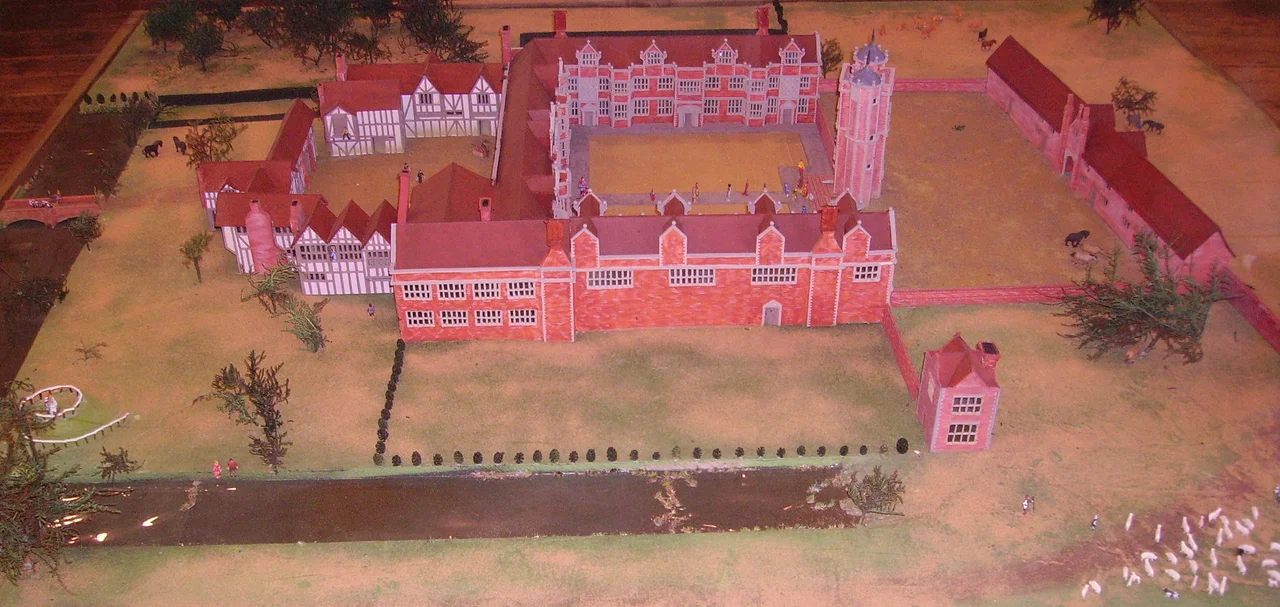
Vita Sackville-West and Harold Nicolson bought a wreck. In 1930, Sissinghurst was a collection of dilapidated buildings - the surviving fragments of an Elizabethan manor house long abandoned, set on the remains of a medieval moat. The grounds were unkempt. The locals thought they were mad. Over the next thirty years, Sackville-West and Nicolson transformed it into one of the most influential gardens of the twentieth century, the prototype of the English country garden in its modern form: a series of intimate garden rooms, separated by hedges, each with a colour theme and a clear character. The White Garden, the Cottage Garden, the Rose Garden, the Lime Walk. It is now the most visited garden in England. Visitors who come for the roses sometimes do not realise they are also walking through one of literature's most remarkable marriages.
A Marriage of Their Own Design
Vita Sackville-West and Harold Nicolson were both gay - or what their generation would have called something else entirely - and they were married to each other for forty-nine years. The arrangement was unconventional and openly so. They had children together. They loved other people, sometimes intensely: Vita's affair with Virginia Woolf became literature; Harold's male relationships were quieter but no less real. They wrote each other every day they were apart, sometimes hundreds of letters in a year, and the love that runs through that correspondence is unmistakable. Sissinghurst was their joint project, the third country in their marriage. Harold designed the structure - the walks, the axes, the architectural framework. Vita filled the rooms with plants. They worked from separate towers, met in the middle, and built something together that neither could have made alone.
The White Garden
The White Garden is the famous one. Roses, irises, foxgloves, gypsophila - everything in shades of white, silver, and pale grey, set among silver-leaved plants and dark yew hedges. Rosa mulliganii climbs over an arbour at the centre, providing a vast white cloud in summer. The garden was conceived in the late 1940s and refined into the 1950s, when Sackville-West and Nicolson were in late middle age. It became one of the most copied garden designs in the world. The other rooms each have their own colour discipline: the Cottage Garden in hot reds and yellows, the Purple Border, the Rose Garden in a riot of old varieties Vita collected obsessively. By 1953, John Vass counted 194 different rose varieties on the property. Her preference was for species roses and old garden varieties - bourbons, damasks, gallicas, the deep-scented roses of pre-twentieth-century gardens.
Vita's Roses
Vita Sackville-West wrote about roses with the precision of a poet and the patience of a gardener. Of Madame Plantier, the noisette climbing in the Orchard, she wrote: I go out and look at her in the moonlight: she gleams, a pear-shaped ghost, contriving to look both matronly and virginal. She loved the bourbon Madame Isaac Pereire, which the rosarian Graham Stuart Thomas called possibly the most powerfully fragrant of all roses. When she first visited Sissinghurst in 1930, she discovered a dark red double-flowered Rosa gallica growing wild in the property - probably planted centuries earlier, now naturalised among the ruins. She kept it, propagated it, and gave it a name. It is now sold worldwide as the cultivar Sissinghurst Castle. Her favourite roses became reference points for the entire English gardening tradition.
Named Cultivars
Sackville-West disliked having plants named after people, and she and Nicolson once dug up a rose that had been named Lady Sackville after her mother. But Sissinghurst has accumulated its own roster of named cultivars over the decades. There is the Sissinghurst rose, a Pulmonaria Sissinghurst White with large white flowers and white-spotted leaves, an Iris Sissinghurst bred by a Kent gardener in 1969. There is Rosmarinus Sissinghurst Blue, a self-seeded rosemary discovered growing in the Tower steps with upright stems and deeper blue flowers than the common variety. The garden has its quirks of memorial: Pamela Schwerdt and Sibylle Kreutzberger, who ran the garden after Sackville-West's death in 1962, found a remarkable Phlox stolonifera in a florist's shop near the Chelsea Flower Show and named it Violet Vere after Schwerdt's mother on her ninetieth birthday.
Garden Rooms, Tower Library
Vita worked from her writing room in the Elizabethan tower at the centre of the garden - the surviving fragment of the medieval manor, climbed by a spiral stair, looking out over the Weald in every direction. Her library is still there, intact, the books she actually used to write. The Tower is a place of pilgrimage now for readers of Orlando, which Virginia Woolf wrote as a love letter to her, and for readers of Vita's own poetry and novels. Harold's writing room was elsewhere on the property, more domestic in scale. They visited each other through the day, talked in the evening, wrote at night. The Great Storm of 1987 hit Sissinghurst hard, and the Orchard in particular suffered heavy losses - much of the planting visitors see now is restoration from that disaster. The National Trust took over the garden after Nigel Nicolson, Vita's son, transferred it in 1967. It is open every day. It is impossibly crowded. The roses do not seem to mind.
From the Air
Located at 51.12 degrees N, 0.58 degrees E, in the Weald of Kent between Cranbrook and Sissinghurst village. The garden compound is visible as a distinct ordered geometric arrangement set within open Wealden farmland - the Elizabethan tower rises as the most prominent feature, with the various walled garden rooms organised around it. Nearest airports: London Gatwick (EGKK) twenty-eight miles west, Lydd (EGMD) eighteen miles southeast. Best viewed at 2,000-3,500 feet on clear days, ideally in low summer light when the garden's geometry shows most clearly.
Nearby Stories
- Saltwood Castle 2.8 km away
- Jezreel's Tower 5.4 km away
- Bethlem Royal Hospital 6.2 km away
- Herne Bay Pier 6.7 km away
- Royal Sovereign Lighthouse 11 km away
- Plymouth Brethren 15 km away
- Battle of Boulogne 40 km away
- Fratton Park 75 km away