
Sulukule
Sometime around 1050 CE, a community of Roma set up camp outside the walls of Constantinople, the greatest city in the Christian world. They had traveled far — from India, generations earlier — and they stayed. When the Ottomans conquered the city four centuries later and renamed it Istanbul, Sultan Mehmet II granted them official permission to remain on the land that became Sulukule. In doing so, he ratified what was already true: this was home. The neighborhood they built beside Istanbul's massive Theodosian land walls became, by most accounts, the oldest continuously inhabited Romani settlement in the world. Nearly a thousand years of music, family, and community accumulated in those narrow streets — until demolition crews arrived in 2008 and took most of it apart in a matter of months.
A Thousand Years of Music
Sulukule was not simply where the Roma of Istanbul lived. It was where Istanbul went to hear them play. For centuries, the neighborhood's entertainment houses — small, intimate venues packed into the shadow of the Byzantine walls — drew visitors from across the city and beyond. Roma musicians and dancers performed there night after night, generation after generation, keeping alive a tradition of improvised, emotionally charged music that had no equivalent anywhere else in the city. The sound of Sulukule was recognizable to anyone who knew Istanbul: driving rhythms, clarinet lines that bent and wailed, voices that seemed to hold the whole weight of a people's history. Sema Yildiz, a Romani dancer and actress who grew up there, became one of the neighborhood's most recognized artistic figures. She was one of many. The entertainment houses were not venues that happened to hire Roma performers — they were Roma institutions, shaped entirely by the community that built them.
When the Music Stopped
In 1992, Istanbul authorities closed Sulukule's entertainment houses. The official reasons varied, but the effect was clear: the neighborhood's economic lifeblood was severed. Without the income from music and performance, families struggled. Buildings went unrepaired. The community that had endured Ottoman conquest, Byzantine collapse, earthquake, and fire found itself in serious decline — not from any force of nature, but from a municipal decision. For the next decade and a half, Sulukule existed in a kind of suspended state, its people still there, its culture still present, but its public life diminished. Then came the announcement that would end it.
The Demolition
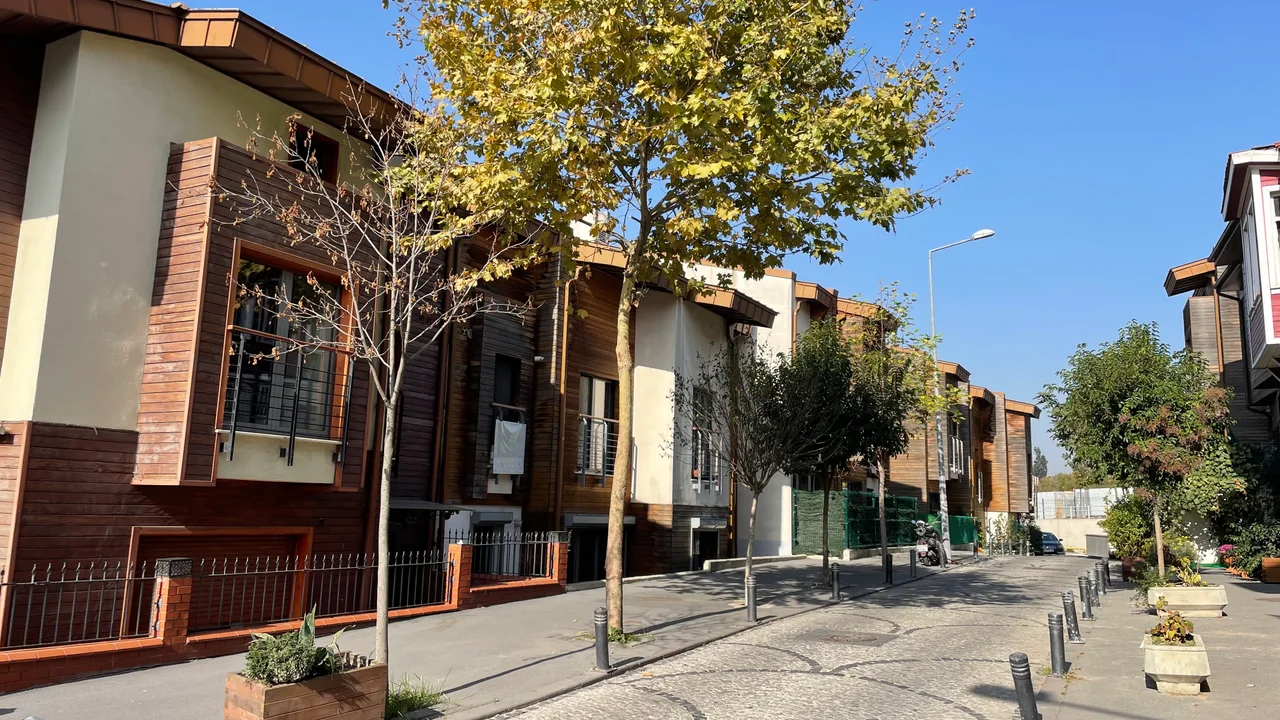
In 2005, authorities in the Fatih and Greater Istanbul municipalities announced plans to redevelop Sulukule. The old houses — Ottoman-era structures, small and dense, built around shared courtyards — would be demolished. In their place would rise new housing priced far beyond what most Sulukule residents could afford. Residents and community advocates protested. International organizations raised alarms. Scholars and architects objected to the destruction of historically significant structures. None of it stopped what came next. In 2008, compulsory purchase orders were issued and forced evictions began. Residents who had lived in the same houses for generations — some tracing family roots there back centuries — were displaced. Researchers and journalists who documented the process noted that the evictions fell disproportionately on the Romani community. The neighborhood was not renovated. It was erased.
What the Walls Remain
The Theodosian land walls still stand beside where Sulukule once stood — massive, ancient, largely intact after fifteen centuries. The walls survived the fall of Byzantium, sieges and earthquakes and centuries of neglect. The neighborhood that sheltered against them for a thousand years did not survive a city council decision. New construction has risen on the cleared land, much of it the expensive housing that replaced the old structures. The community of musicians and families that gave Sulukule its meaning is gone, scattered to other parts of Istanbul and beyond. What remains, for those who visit the site, is mostly the absence — the sense of a long story abruptly cut short. Scholars of urban development have written about Sulukule as a case study in how "renewal" projects can function as displacement mechanisms targeting minority communities. The Romani families who lived there would not have needed an academic framework to understand what happened to them.
A Legacy in the Margins
Roma communities have been part of Istanbul's life for close to a millennium. They have survived at the margins of successive empires — Byzantine, Ottoman, republican — adapting, persisting, contributing. Sulukule was the most visible expression of that persistence: a place with a name, a culture, a reputation, a thousand years of continuous habitation. Its loss registers not just as the demolition of old buildings but as the erasure of a living community from the map of a city it helped define. The music that filled those entertainment houses for centuries did not disappear entirely — it lives in recordings, in the memories of those who heard it, in the hands of musicians who grew up there and carry it still. But Sulukule itself, the place, is gone. In its absence, the ancient walls stand unchanged, indifferent witnesses to everything that has happened in their shadow.
From the Air
Sulukule sits at approximately 41.026°N, 28.934°E on Istanbul's historic European peninsula, tucked directly against the Theodosian land walls in the Fatih district. From the air, the double line of the ancient walls is clearly visible running north-south; Sulukule lay just inside their western face. Flying into LTFM (Istanbul Airport, 35 km northwest), the land walls form one of the most dramatic visible features on the peninsula below. At 1,500 feet, the density of the old city gives way to the distinctive rhythm of domes and minarets; the cleared ground where Sulukule once stood is visible north of the Edirnekapı gate. Best viewed on approach from the west in clear weather.
Nearby Stories
- Kocaeli Peninsula 7.6 km away
- Second Battle of Çatalca 11 km away
- Istanbul's Rural Outskirts 14 km away
- MV Struma 20 km away
- HMAS AE2 36 km away
- Bursa 66 km away
- Sangarius Bridge 71 km away
- Januarius MacGahan 101 km away