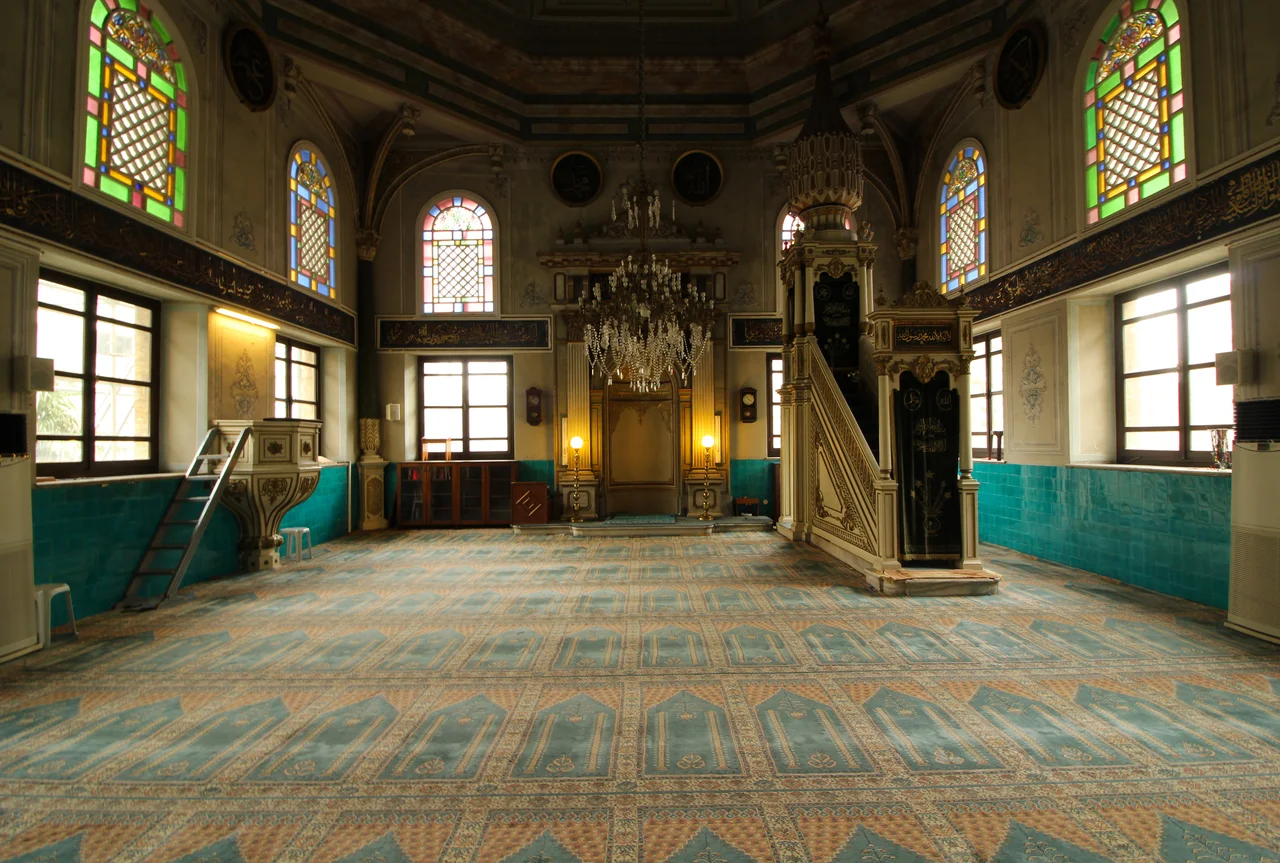

Teşvikiye Mosque
At the corner of Teşvikiye Caddesi in Nişantaşı, where the pavement cafes fill with fashionable Istanbullus and the boutiques deal in names that cost more than most people's monthly rent, the Teşvikiye Mosque stands behind a set of enormous white columns and refuses to apologize for being exactly what it is: a grand imperial statement from the mid-19th century, dropped into one of the 21st century's most self-consciously stylish neighborhoods. The contrast works. It always has.
Two Sultans, One Mosque
The mosque has a layered origin. Sultan Selim III first commissioned a mosque on this site in 1794, during the late Ottoman era when the area north of the Golden Horn was beginning to attract a wealthier, more Europeanized population. That earlier structure did not survive in its original form. Most of what stands today was completed in 1854, during the reign of Sultan Abdülmecid I — the same sultan who built Dolmabahçe Palace along the Bosphorus shore and commissioned the Ortaköy Mosque. Abdülmecid was drawn to European architectural idioms, and the Teşvikiye Mosque reflects that sensibility: its neo-baroque style speaks the visual language of 19th-century European ecclesiastical and palatial architecture, translated into the context of an Ottoman neighborhood mosque.
An Armenian Architect's Signature
The mosque was designed by Krikor Balyan, a member of the Balyan family — the dynasty of Armenian architects who shaped much of imperial Istanbul's 19th-century built environment. The Balyans served the Ottoman court across multiple generations, designing palaces, mosques, and public buildings in a range of styles that blended Ottoman tradition with European Baroque and Neoclassical influences. Dolmabahçe Palace, the Ortaköy Mosque, Çırağan Palace — all bear the Balyan imprint. That an Armenian family occupied such a central role in defining the visual identity of the Ottoman capital is one of the period's signal facts, a reminder of the cosmopolitan complexity that the empire contained even as it moved toward the catastrophes of the 20th century.
The White Columns
The mosque's most distinctive feature — the enormous white columns that line its front facade — was added during a renovation in the late 19th century. They are unusual for a mosque in Istanbul, borrowing more from European civic architecture than from the classical Ottoman tradition of cascading domes and slender minarets. Yet they do not look wrong. The columns give the building an unexpected theatricality, a presence that commands the street corner. Over time, this facade has become the neighborhood's anchor — the reference point around which Nişantaşı orients itself. Istanbul's Nobel Prize-winning novelist Orhan Pamuk, who grew up nearby, mentions the mosque in his memoir "Istanbul: Memories and the City." For Pamuk, and for many residents of the neighborhood, the building is inseparable from the emotional texture of the place.
Farewells and Renovations
The Teşvikiye Mosque has taken on a particular role in Nişantaşı's social life: it is often used as the starting point of funerals for prominent public figures, politicians, writers, and artists whose families have connections to this part of the city. The mosque offers a kind of dignity appropriate to the neighborhood's self-image — a setting for public mourning that is formal without being anonymous. In 2018 the mosque was closed for renovation, work that continued until April 2021, when it reopened to its congregation. The closure was noticed. Three years is a long time for a neighborhood landmark to be scaffolded and shuttered, and its return was something residents marked.
A Neighborhood's Constant
Nişantaşı has changed considerably since 1854. The quarter that was once a prosperous residential district for Ottoman officials and wealthy non-Muslim merchants has become, in the decades since, Istanbul's answer to every city's most polished, expensive, self-aware neighborhood — the kind of place where boutiques specialize and restaurants have waiting lists. Through all of it, the Teşvikiye Mosque has remained. The call to prayer sounds over the café tables and the street traffic at its five daily intervals, a rhythm that does not negotiate with the neighborhood's fashions. The white columns catch the afternoon sun at an angle that the surrounding buildings, however tall, cannot quite block. It is a building that has outlasted its circumstances many times over, and seems settled in the expectation of doing so again.
From the Air
The Teşvikiye Mosque sits at approximately 41.0494°N, 28.9942°E in the Şişli district of Istanbul's European side, roughly 1.5 km north-northeast of Taksim Square. From low altitude, the Nişantaşı neighborhood is visible as a denser, more regular urban grid north of the Taksim plateau. The mosque's minarets and white-columned facade are identifiable landmarks within the neighborhood. The nearest major airport is Istanbul Airport (LTFM), approximately 38 km northwest. Recommended viewing altitude: 1,500–2,500 feet for neighborhood context.
Nearby Stories
- Kocaeli Peninsula 7.6 km away
- Second Battle of Çatalca 11 km away
- Istanbul's Rural Outskirts 14 km away
- MV Struma 20 km away
- HMAS AE2 36 km away
- Bursa 66 km away
- Sangarius Bridge 71 km away
- Januarius MacGahan 101 km away