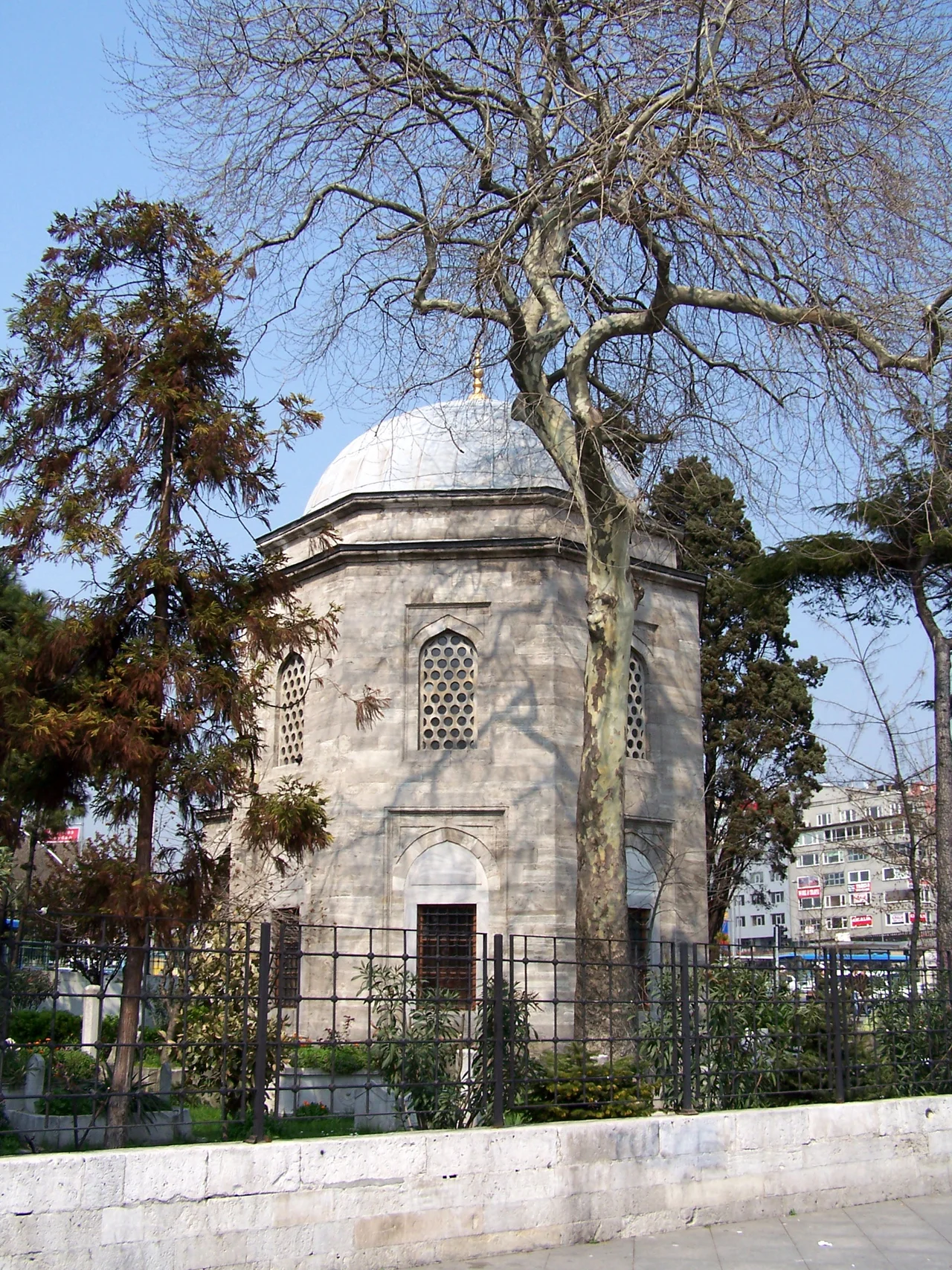

Tomb of Hayreddin Barbarossa
Before every major naval expedition, Ottoman warships would assemble in the waters off Beşiktaş, and officers would come ashore to pay respects at a small domed tomb beside the harbor. That tradition is five centuries old. It continues today. The Turkish Navy still visits the mausoleum of Hayreddin Barbarossa on ceremonial occasions — a thread of institutional memory connecting the modern republic to one of the most feared admirals the Mediterranean world ever produced.
The Admiral Who Remade the Sea
Hayreddin Barbarossa — born on the Greek island of Lesbos, likely in the 1470s, to a father of Albanian origin and a Greek mother — rose from corsair captain to Grand Admiral of the Ottoman fleet through a combination of tactical genius, political savvy, and a willingness to fight outnumbered. He secured Ottoman dominance over the western Mediterranean during the mid-sixteenth century, defeating the allied Christian fleets and raiding the coasts of Spain, Italy, and North Africa with impunity. Holy Roman Emperor Charles V and the Spanish crown regarded him as one of the greatest threats their empire faced. The Ottomans regarded him as a deliverer. Sultan Suleiman the Magnificent named him Kapudan Pasha — admiral of the fleet — and the appointment transformed the Ottoman Navy from a regional force into an instrument of imperial projection. By the time Barbarossa died in 1546, the empire's flag flew over most of the North African coast.
Sinan's Stone Tribute
The mausoleum in Beşiktaş was designed and built in 1541 by Mimar Sinan — the same architect who would later create the Süleymaniye and Selimiye mosques, widely considered the pinnacle of Ottoman architecture. That Sinan was entrusted with Barbarossa's tomb speaks to how the admiral was regarded at court: not merely as a military commander but as a figure worth commemorating in lasting stone. The building retains its original features, an unusual degree of survival in a city that has burned, been rebuilt, and been rebuilt again across five centuries. Its proportions are characteristic of Sinan's work: measured, unshowy, built to last. It sits near the ferry port of Beşiktaş, on the European shore of the Bosphorus, where the harbor that once sheltered the Ottoman fleet is now lined with commuter boats.
A Square Built Around Memory
The tomb does not stand alone. In the same square, the Istanbul Naval Museum houses centuries of Ottoman and Turkish maritime history. A large bronze monument to Barbarossa dominates the open space — the admiral in full commander's posture, looking out toward the water his fleet once commanded. Barbaros Boulevard, one of Istanbul's major arteries running north toward Beşiktaş from the shore, takes its name from him. The street, the monument, the museum, and the mausoleum together constitute something rare: a public space where a city genuinely remembers one person. The tomb is open to the public on specific days — July 1, for the Cabotage Festival, and April 4, for the Memorial Day of Naval Martyrs. On those days, the Turkish Navy conducts ceremonies and offerings at the site, exactly as the Ottoman Navy did before sailing to war.
The Weight of the Harbor
There is something unusual about a military tradition that has continued unbroken across a revolution, the fall of one empire, and the rise of another. The Ottoman Empire that Barbarossa served ceased to exist in 1923. The institutions that grew from its ruins — the Turkish Republic, the Turkish Armed Forces, the Turkish Navy — were created in deliberate contrast to what came before. And yet the navy kept the ceremony. It kept coming to the tomb by the water where the fleet assembled. Barbarossa himself would likely have understood: navies are practical institutions, and there is practical value in connecting sailors to their most accomplished predecessors. The harbor has changed. The ships have changed. The visits continue.
From the Air
The tomb is located at approximately 41.042°N, 29.007°E in the Beşiktaş district on Istanbul's European Bosphorus shore. From the air at around 1,500 feet, the Bosphorus strait is immediately below — the narrow, intensely trafficked waterway connecting the Black Sea to the Sea of Marmara. Beşiktaş ferry terminal is a visible landmark directly on the water. Istanbul Airport (LTFM) is approximately 25 km to the northwest. The Bosphorus bridges are visible from altitude, with the Bosphorus's European shore neighborhoods running from Beşiktaş northward toward Sarıyer.
Nearby Stories
- Kocaeli Peninsula 7.6 km away
- Second Battle of Çatalca 11 km away
- Istanbul's Rural Outskirts 14 km away
- MV Struma 20 km away
- HMAS AE2 36 km away
- Bursa 66 km away
- Sangarius Bridge 71 km away
- Januarius MacGahan 101 km away