
Vefa
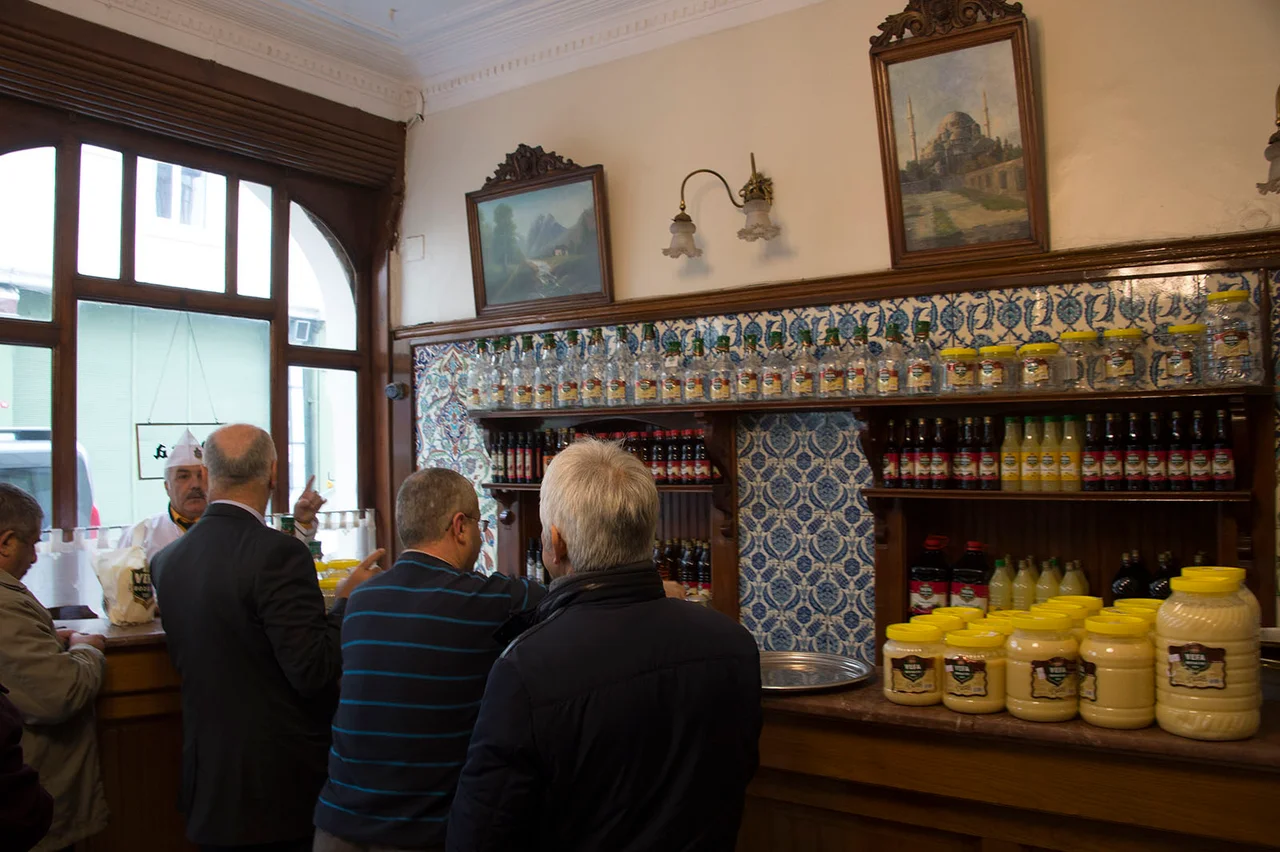
Nobody comes to Vefa by accident. You have to want it. Tucked behind the great Aqueduct of Valens in the Fatih district of Istanbul, this compact neighborhood resists the tourist current that sweeps most visitors straight from the Grand Bazaar to the Süleymaniye. Those who do find their way here are usually looking for one specific thing: a glass of boza, the cloudy, mildly fermented wheat drink that the Vefa Bozacısı shop has been ladling out since 1876. They arrive, they drink, they notice the glass in the showcase on the wall — the one Mustafa Kemal Atatürk himself used when he visited — and then they look up and realize the street around them is one of the densest accumulations of layers in a city built entirely of layers.
The Name on the Wall
Vefa takes its name from Shaykh Ebu'l Vefa, a Muslim saint — a wali — buried in his own mosque and dervish lodge (dergah) within the quarter. That founding piety gives the neighborhood a quality unusual even in Istanbul: a sense of continuous habitation by people who cared about continuity. The boza shop is the most vivid expression of that spirit. Founded in 1876, Vefa Bozacısı is the oldest establishment in Istanbul still selling boza — a drink with roots stretching back through Ottoman and Byzantine times alike. Orhan Pamuk, the Nobel laureate who grew up in this city, mentions it repeatedly in his novel A Strangeness in My Mind, which follows an itinerant boza-seller through Istanbul's streets. In real life, Atatürk visited the shop; his glass is preserved in a showcase in the wall. That detail alone tells you something about Vefa: it keeps things.
A Church, a Library, a School
Step away from the boza counter and the Byzantine and Ottoman past presses in from every direction. The Vefa Kilise Mosque — literally 'Church-Mosque of Vefa' — is a small Byzantine church that scholars believe was originally dedicated to Hagios Theodoros (St. Theodore), dating to the Middle Byzantine period of the 10th to 11th centuries. After centuries of neglect, it has been fully restored. Nearby stands the Atif Efendi Library, built in the 1740s as the second library erected in Ottoman Constantinople — a brick-and-stone building that has also been restored and is still in use. Down the street, in the grounds of Vefa High School (Vefa Lisesi), designed by the architect Kemalettin Bey in the 1920s, stands yet another early 18th-century library commissioned by Damad Şehir Ali Paşa. Everywhere in Vefa, something was built to last, and then lasted.
Ottoman Marble and Holy Water
The quarter's Ottoman fabric is equally dense. The Recai Mehmed Efendi primary school, opened in 1775, has a facade entirely covered in marble carvings, incorporating fountains and a sebil — a grilled kiosk from which drinks were dispensed free to passersby, a form of public charity built into the architecture itself. Nearby is the Ekmekcizade Ahmed Paşa Medresesi, an Ottoman theological school built around 1618 for a vizier of the sultan. These buildings were not monuments in their time; they were the working institutions of a living city. The fact that they survive at all, in a quarter never quite fashionable enough to be demolished and rebuilt, is itself a kind of miracle.
Where the Aqueduct Runs
At the northern edge of Vefa, near the Vezneciler Metro stop, stands the Kalenderhane Mosque — originally the Middle Byzantine church of Theotokos Kyriotissa, built beside the remains of an early Byzantine bathhouse. Running along one wall is a stretch of the Aqueduct of Valens, the great Roman waterway that once carried water into Constantinople from Thrace. The aqueduct is still standing, still arching over the modern city, and in Vefa you can walk directly beneath it. That juxtaposition — a Roman aqueduct, a Byzantine church turned mosque, a restored Ottoman library, a 19th-century boza shop — compressed into a few hundred meters of backstreet — is not staged for tourists. It simply exists, the way everything in Vefa exists: because someone cared enough to keep it.
A Neighborhood That Stayed Itself
Vefa has not gentrified in the way that Cihangir or Karaköy have. The main road, Atatürk Bulvarı, was pushed through the old city according to the plan of French architect Henri Prost — largely built in the 1940s and extended by Prime Minister Menderes in the 1950s — cutting new wounds through ancient fabric. But Vefa survived to its east, quieter and less visited than the Süleymaniye district just across the way. Buses and the M2 Metro line connect it to the rest of the city, so it is not isolated. It is simply overlooked — which may be exactly why it remains so intact. Vefa S.K., one of Istanbul's older football clubs, keeps a local allegiance alive that completes the picture: a neighborhood with its saint, its shop, its team, and its deeply accumulated past.
From the Air
Vefa lies at approximately 41.016°N, 28.960°E, in the Fatih district on the European side of Istanbul. Approaching from the west at 3,000–4,000 feet, the Aqueduct of Valens is the dominant visual landmark — a long Roman arcade running east–west through the urban fabric. The great dome of the Süleymaniye Mosque rises immediately to the southeast. Nearest airport is Istanbul Airport (LTFM), approximately 35 km to the northwest. Bosphorus crossings and the Golden Horn are visible in clear conditions at this altitude.
Nearby Stories
- Kocaeli Peninsula 7.6 km away
- Second Battle of Çatalca 11 km away
- Istanbul's Rural Outskirts 14 km away
- MV Struma 20 km away
- HMAS AE2 36 km away
- Bursa 66 km away
- Sangarius Bridge 71 km away
- Januarius MacGahan 101 km away