.jpg)
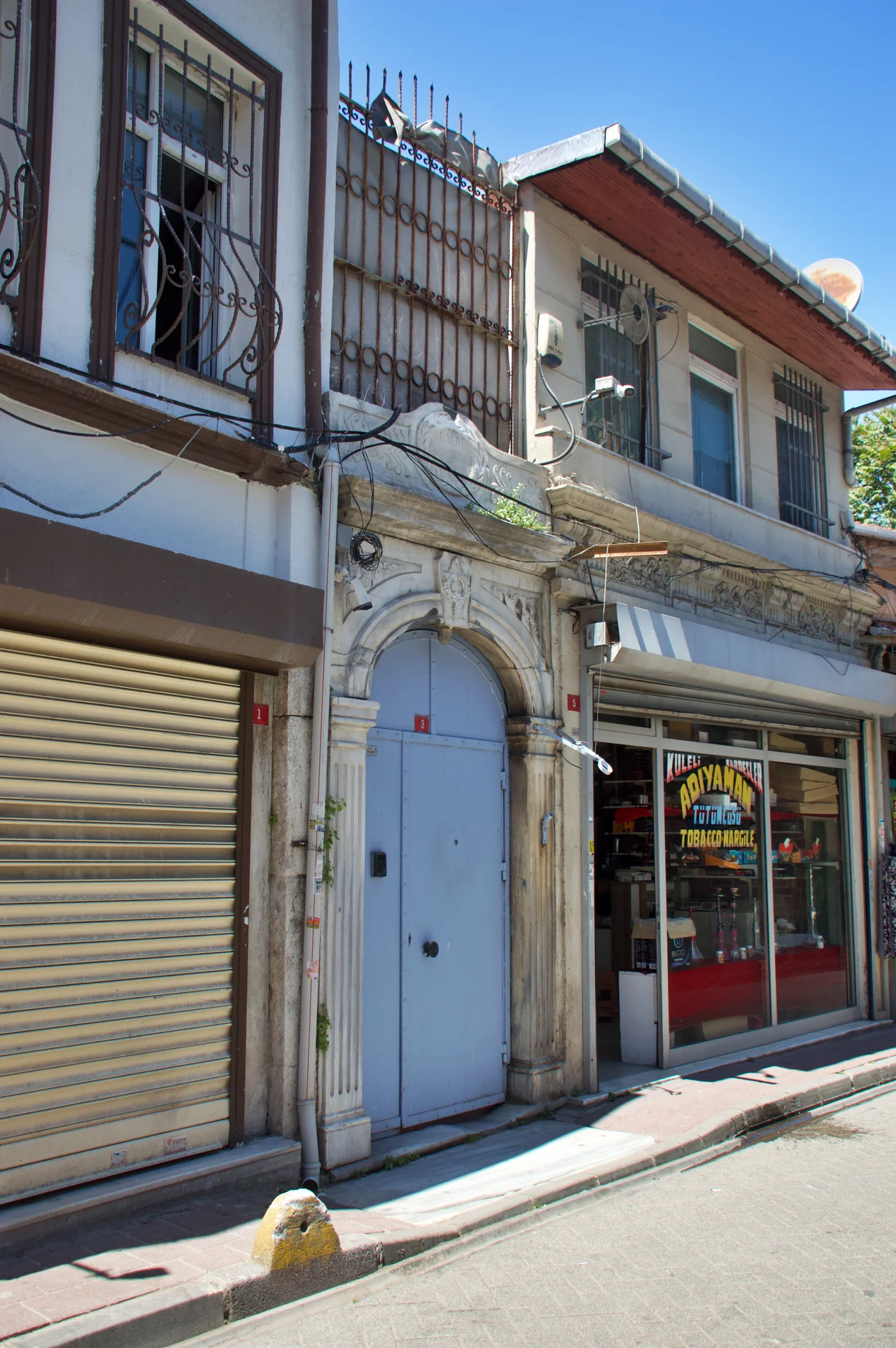
Yanbol Synagogue
The name tells the whole story, if you know how to read it. Yanbol — the Turkish rendering of Yambol, a city in what is now Bulgaria. A congregation of Jews left their Bulgarian home and found their way to Istanbul's Balat quarter, the neighbourhood on the Golden Horn that had been a centre of Jewish life in the city for centuries. They built a synagogue and named it for where they had come from. It was a declaration of identity: we are here, but we remember where we began.
Balat and the Jewish Quarter
The Balat neighbourhood occupies a stretch of the Golden Horn shore on Istanbul's historic peninsula, in the district of Fatih. For much of the Ottoman period, Balat was home to one of the city's most significant Jewish communities — Sephardic Jews whose ancestors had been welcomed into the Ottoman Empire after the Spanish Inquisition expelled them in 1492, alongside communities from elsewhere in the Balkans and the Mediterranean. The neighbourhood was never exclusively Jewish — Greeks and Armenians also lived here — but it carried a distinctly multilingual, multireligious character that set it apart. Synagogues, churches, and mosques stood within walking distance of each other. The Yanbol Synagogue, tucked off Kürkçü Çeşmesi Sokak in the Ayvansaray quarter, is one of the survivors of that layered world — a building that outlasted the political convulsions that reshaped the region around it.
A Congregation from Yambol
The congregation that founded the Yanbol Synagogue came from Yambol, a town in the Thrace region of what is now Bulgaria. Yambol was part of the Ottoman Empire, and Jews had lived there for generations. At some point — the precise date is unrecorded — members of that community migrated to Istanbul and established their own congregation in Balat, bringing the name of their hometown with them. The synagogue they built dates to the eighteenth century, with repairs carried out toward the end of the nineteenth century. The building is also known as the Bulgarian Synagogue, reflecting the geographic identity of its founding congregation. That the community maintained a separate congregation — rather than simply joining existing Balat synagogues — speaks to the strong sense of shared origin among its members, the bonds of language, custom, and memory that Yambol represented.
A Community Diminished, a Building Enduring
The twentieth century was difficult for Istanbul's Jewish community. Emigration — to Israel after 1948, to Europe and the Americas throughout the century — gradually reduced a population that had once numbered in the tens of thousands to a small fraction of its former size. The Yanbol Synagogue reflects that reality: it is open only for Shabbat services, the weekly Sabbath that marks the rhythm of Jewish religious life, because the surrounding community has shrunk too much to sustain daily prayer. But the congregation has not disappeared. That the synagogue continues to hold Shabbat services is itself a statement — that a community descended from Yambol Jews has chosen to maintain this particular building, this particular memory, even as the neighbourhood around it has changed beyond recognition.
Restoration and Rediscovery
In July 2025, the Yanbol Synagogue reopened after a two-year restoration, returning to the community a building that had been closed for repairs. The restoration brought with it an unexpected gift: workers discovered a hidden storeroom during the renovation process, inside which lay precious ritual objects that had been stowed away, possibly for decades. Those objects — Torah ornaments, religious textiles, ceremonial items whose precise history remains to be documented — went on display in a new exhibit, transforming the reopening into something more than a building returning to use. It was a recovery: a glimpse into the accumulated devotional life of the congregation, material evidence of the prayers and observances that had filled this room across the centuries. The Yanbol Synagogue is small, its congregation modest, its street unassuming. But the weight of what it holds — community, memory, and recently, rediscovered objects from a hidden room — makes it one of Balat's most remarkable places.
From the Air
The Yanbol Synagogue is located at approximately 41.033°N, 28.948°E in the Balat neighbourhood of Istanbul's Fatih district, on the western shore of the Golden Horn. From the air, the Golden Horn — the narrow inlet that separates the historic peninsula from the rest of the European city — is a clear geographic landmark. Balat lies along its southern shore. Istanbul Airport (LTFM) lies approximately 30 km to the northwest. A low-altitude pass at 1,500–2,500 feet over the Golden Horn shows the density of the historic neighbourhood and the waterway that defined Jewish, Greek, and Armenian Istanbul for centuries.
Nearby Stories
- Kocaeli Peninsula 7.6 km away
- Second Battle of Çatalca 11 km away
- Istanbul's Rural Outskirts 14 km away
- MV Struma 20 km away
- HMAS AE2 36 km away
- Bursa 66 km away
- Sangarius Bridge 71 km away
- Januarius MacGahan 101 km away